Clement of Rome stands at the dawn of the post-apostolic Church as a steady pastoral presence whose gentle authority is marked by settled conviction. We know little about his life; what we do have is his voice—preserved in a pastoral letter sent from the Church in Rome to the Church in Corinth during a moment of painful division. Remembered in early Christian memory as a leading presbyter in Rome (and later often listed among its bishops), Clement writes in a spirit of sober reverence before God: firm in truth, gentle in tone, and deeply concerned for repentance, peace, and good order in the household of faith. His pages are saturated with Scripture, and at their heart is a humility that still feels convicting. He speaks with resolute clarity about the believer’s standing before God—refusing to ground it in human wisdom, piety, or “works done in holiness of heart,” and instead pointing to God’s gracious act received through faith. In Clement, we meet a man with a shepherd’s heart—whose enduring legacy is a call to unity, holiness, and steadfast trust in the mercy of God.
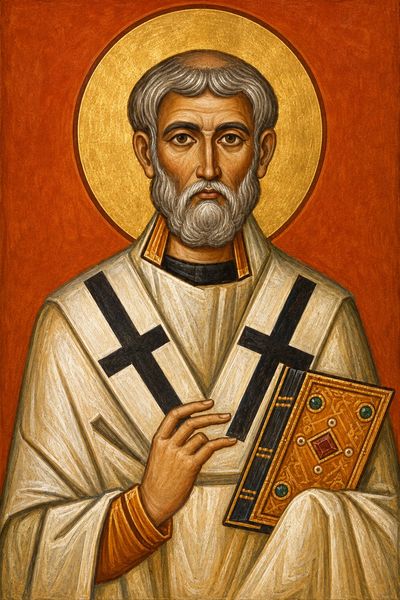
Clement of Rome (ca. 35-99)
“Let us cleave then to His blessing, and consider what are the means of possessing it. Let us think over the things which have taken place from the beginning. For what reason was our father Abraham blessed? Was it not because he wrought righteousness and truth through faith? Isaac, with perfect confidence, as if knowing what was to happen, cheerfully yielded himself as a sacrifice. Jacob, through reason of his brother, went forth with humility from his own land, and came to Laban and served him; and there was given to him the sceptre of the twelve tribes of Israel. Whosoever will candidly consider each particular, will recognise the greatness of the gifts which were given by him. For from him have sprung the priests and all the Levites who minister at the altar of God. From him also [was descended] our Lord Jesus Christ according to the flesh. From him [arose] kings, princes, and rulers of the race of Judah. Nor are his other tribes in small glory, inasmuch as God had promised, Your seed shall be as the stars of heaven. All these, therefore, were highly honoured, and made great, not for their own sake, or for their own works, or for the righteousness which they wrought, but through the operation of His will. And we, too, being called by His will in Christ Jesus, are not justified by ourselves, nor by our own wisdom, or understanding, or godliness, or works which we have wrought in holiness of heart; but by that faith through which, from the beginning, Almighty God has justified all men; to whom be glory for ever and ever. Amen.” [bold added]
Clement, 1 Clem. 31.1–32.4, ANF 9.
We use cookies to analyze website traffic and optimize your website experience. By accepting our use of cookies, your data will be aggregated with all other user data.